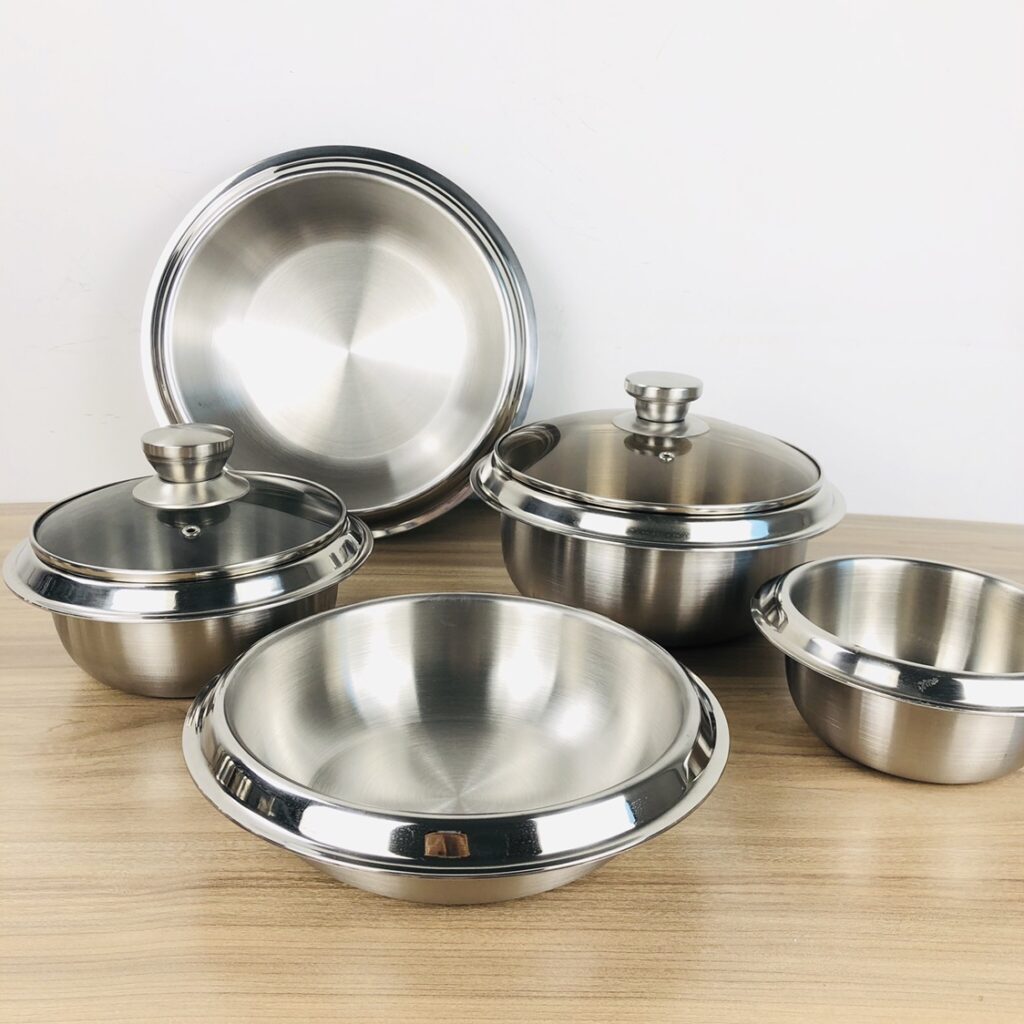
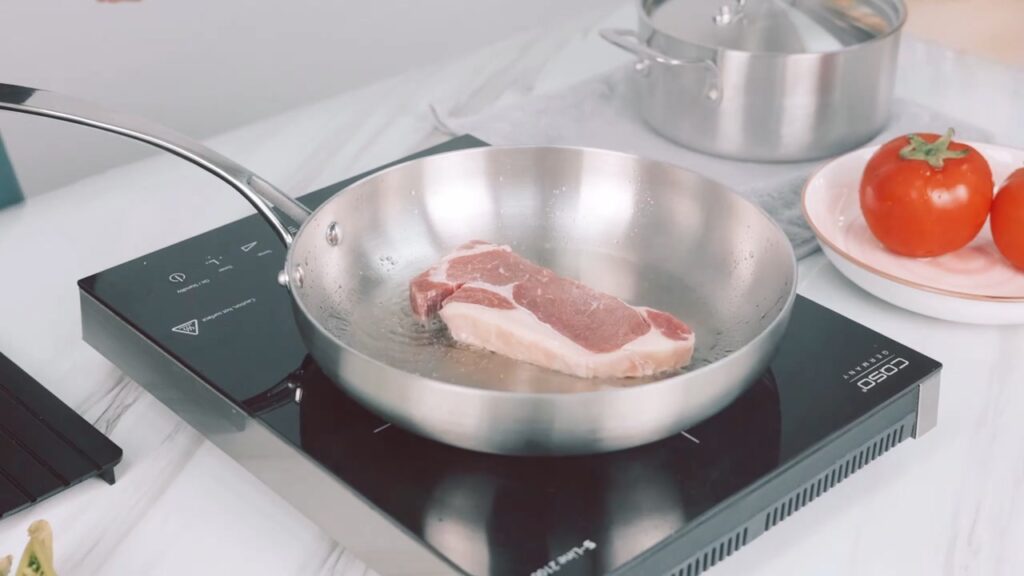
Tri-ply stainless steel cookware is currently in a “breakout period,” transitioning from high-end professional equipment to a household staple. By bonding a heat-conductive core (aluminum or copper) between two layers of durable stainless steel, this technology solves the uneven heating issues common in traditional single-ply stainless steel pans.
1. Market Penetration: A Rising “Backbone” of the Industry
Tri-ply cookware is capturing an increasingly significant share of the global cookware market (which includes non-stick, cast iron, and single-ply pans):
Global Market Size: The global tri-ply cookware market reached approximately $5.62 billion in 2024 and is projected to grow to roughly $9.54 billion by 2033, with a Compound Annual Growth Rate (CAGR) of about 6.1%.
Household Adoption: In developed regions (North America, Western Europe), tri-ply has become the mainstream choice for middle-class households. In Asia-Pacific markets like China and India, penetration is rising rapidly due to “consumption upgrading” and concerns over the safety of chemical coatings. The Asia-Pacific region now accounts for about 44% of the global stainless steel cookware market.
Application Segments:
Residential: Accounts for over 70% of the market and remains the primary engine of growth.
Commercial: Restaurants and hotels prefer tri-ply for its extreme durability and ease of maintenance under high-frequency use.
2. Core Drivers and Trends
A. The “PFOA-Free” and Health Consciousness Trend
Growing consumer concern regarding traditional non-stick coatings (like PFOA/PFAS) potentially releasing toxins at high temperatures has fueled the popularity of tri-ply steel. It is viewed as a healthier, eco-friendly, and permanent cooking solution.
B. Induction-Ready Compatibility
With the global shift toward kitchen electrification, induction cooktops are becoming standard. The outer layer of tri-ply cookware is typically made of 430 ferritic stainless steel, which is magnetic. This ensures universal compatibility across induction, gas, electric stoves, and ovens.
C. Professionalization of Home Cooking
Influenced by social media and culinary shows, home cooks are increasingly investing in “chef-grade” gear. Tri-ply is favored for its precise temperature control and aesthetic appeal (mirror-polished or brushed finishes), serving as both a kitchen centerpiece and a symbol of culinary skill.
D. Evolution: From 3-Ply to Multi-Ply
While 3-ply remains the gold standard for balance, the market is expanding toward 5-ply and 7-ply constructions:
Material Innovation: Manufacturers are introducing copper cores to enhance thermal sensitivity.
Physical Texturing: To lower the learning curve for stainless steel, technologies like “honeycomb” or “laser-etched” patterns are being added to provide physical non-stick properties without chemical coatings.
Summary and Outlook
Tri-ply cookware is successfully bridging the gap between professional tools and everyday essentials. Looking ahead, the focus will be on lightweight designs, enhanced physical non-stick surfaces, and seamless integration with smart induction technology.